

DIG THIS! Green Ramblings from GBG

Just Try To Keep Up With Debra Lee Baldwin

Debra Lee Baldwin photoIn the past several years, succulents have become a mainstay in drought-tolerant gardens throughout central California. Their practicality aside, the geometric shapes and colors ranging from sublime to electrifying create a definitive sense of place in a garden. One woman in particular has made a career of illustrating how to creatively plant and care for them. Best-selling author Debra Lee Baldwin has written books, penned countless articles, createdilluminating websites and blogs, excelled at photojournalism, and perfected watercolors–all in support of succulent plants. Through her books and lectures she has brought the succulent movement to established gardeners and curious novices alike. Designing with Succulents (Timber Press, 2007) allowed homeowners and professionals to see the many applications for succulents in gardens. Her popularity grew, as did that of the plants themselves, and Succulent Container Gardens (Timber Press, 2010) was born, encouraging plant-o-files in any location or climate to cultivate these remarkable plants.

Debra is a one-woman bibliography of plant wisdom and beauty. One of her websites, http://www.succulentchic.net (dedicated to these “fascinating fat-leaved plants and exploring their design potential”) features beautiful images of co-mingled succulents, channeling the love of plants into creative designs that are easy for anyone to execute. Her main website, http://www.debraleebaldwin.com/, describes Debra more thoroughly by listing her blogs, links, and CDs; sharing the progress of her own garden; and lists where to catch this prolific potter’s next presentation.

More personally, I’m truly inspired by the tireless way in which she has unified the leaders of the plant world and brings exposure to their work. She has captured and crystalized the succulent movement with her lectures, networking, and drive to promote these remarkable plants.
(Photos used with permission from www.DebraLeeBaldwin.com)
Tags: , , , , , , , ,

Plant Puzzler Revealed!

Happy New Year to all! Gardens by Gabriel is happy to announce that our winners of last week’s Plant Puzzler were Madeline, Kaveh, and Greg, who correctly guessed Kniphofia rooperi.

Sadly, this brings our 6-week Plant Puzzler to a close. Thank you for your willingness to guess and share, and to pit your wits against some of my Mediterranean favorites! We’re pleased to be able to make a donation to the SLO Botanical Garden on your behalf, for each of your guesses. We’re rounding up to the nearest Benjamin for an even $100.

It was a close count to determine the top two guessers, but after tallying the totals we have two clear winners:
Madeline and Greg, who vyed for first place with four and five correct answers, respectively. The prize for each of these winners is a bare-root tree, locally sourced and hand-selected. We didn’t make this easy on you, so we’re mightily impressed with all of you.


Week 6: Mystery Plant December 26th, 2011

Happy Holidays, Plant Puzzlers! Are you enjoying figgy pudding and playing games with family? Our last Puzzler begins today–but first, a recap of last week’s Mystery Plant. Verbena Lilacena was the plant in question. Our hint alluded to its “lilac-colored blooms” in the hopes that wordplay would jog your plant cells. Our big winners for the week? Madeline and Kaveh! Congrats!

Join us in donating to the SLO Botanical Garden with our very last Plant Puzzler. This week’s contender:

  • My dark evergreen foliage is arranged in grassy green clumps
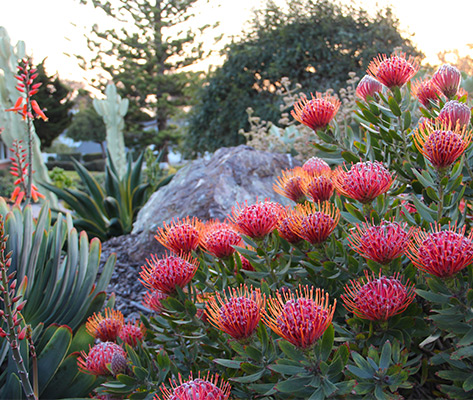
  • Emerging only in the fall and winter, my flowers are chunky and egg-shaped
  • Each bloom has a radiant yellow base that blends to a brilliant reddish-orange cone of tubular flowers
  • My leaves are arching and keeled

Our last Puzzler will be revealed on Monday, January First. Enjoy your New Year Celebrations, plot your guesses, share your tips and tricks, and visit our site to make your guesses!


2011 Plant Puzzler #5 December 19th

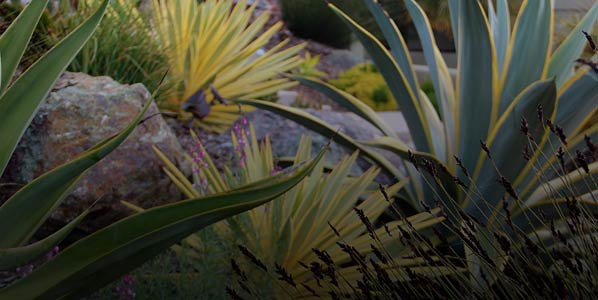
Ready for the Latest, Plant Lovers? Lots of good guesses this week, and some close calls, too! This Mystery Plant was tricky because it bears a strong resemblance to its agave cousins. Many guessers accurately identified the species, Agave vilmoriniana, but then broke into divergent camps in terms of the cultivar, with ‘Stained Glass’ and ‘Variegata’ being the top two.

Perhaps surprisingly, ‘Variegata’ is a variety of agaves that is no longer grown. Once it was discovered, ‘Stained Glass’ gained immediate popularity for its brighter colors and stronger contrast. It was also our choice for last week’s Plant Puzzler! Congratulations Megan, Chris, Greg, Madeline, Nick, and Kaveh!

Remember: Your accurate guesses are building the donation cache which will benefit the San Luis Obispo Botanical Garden. Our Facebook page will contain a hint this Wednesday, December 21st for this week’s Mystery Plant.

This One’s Got Flower Power


  • I’m what’s known as a “sub-shrub”
  • I grow in tidy 3×4 mounds
  • My leaves are deeply dissected
  • My blooms are a rich, vibrant purple that fades as time passes
  • Per season, I’m one of the longest-blooming plants on the Central Coast

2011 Plant Puzzler #4 December 12th

CONGRATULATIONS to our many winners this week! Dendromecon rigida var. harfordii was our Mystery Plant, and these plant-o-files were all spot on: Heather, Alice, Bracey, Mike, Chrystal, Kaveh, Madeline, Becki, Daniel, Mary, and Greg 

DON’T FORGET:

For every correct Plant Puzzler answer we receive, we’ll donate $1.00 to the SLO Botanical Garden. The top two people who guess the most correct plants at the end of the contest will win a bare-root tree! Check back next Monday, December 19th for the Correct answer to our Mystery Plant for December 12th’s Plant Puzzler.


And now, introducing our next Mystery Plant: 

  • I originated on steep Mexican cliff sides
  • My brethren grow practically vertically
  • My arching, curving, serpentine leaves are succulent in texture and variegated in color
  • My many leaves are dried and pounded into a fibrous brush whose bristles contain their own soap (I’ve always been good at multi-tasking)
  • Note: The cultivar we’re looking for in this puzzler adds a twist to the regular species, boasting creamy yellow bands that run the length of the leaves.

WHO AM I??

Enter your guess here! Include your name and email where required, and in the comment box, write the genus, species, and (where applicable) the cultivar name of the current week’s Mystery Plant. Write “Plant Puzzler” in the box marked “Phone” and include the date of the post with your entry. One guess per person, please!

Visit our Facebook page on Wednesday the 14th for a hint!


We Love: Grow Nursery

Tucked behind The Garden Shed in Cambria awaits Grow Nursery,
plant-nerd haven of the Central Coast. 

Not your average plant purveyors, Grow Nursery boasts not only rare gems of the plant kingdom, but creative twists on traditional garden tools and unusual, artful accessories. Devout plantsman and nursery owner Nick Wilkinson’s degree in fine art from San Diego State University perfectly supports his passion for the vibrant shapes and colors of exotic succulents. Knowledgeable in terms of the growing habits and lengthy Latin names of our Mediterranean climate’s botanical palette, Nick is also adept at combining his specialty plant collection with unusual garden artifacts. 

Look for plants tucked into seashells, gum-ball machine terrariums, “living stone” succulents planted in the hollowed husks of actual stones, and more. Grow also offers pottery handcrafted by San Luis Obispo county artists like Richard Rowe, Heidi Petersen, Barbara Flynn, Steve Weaver, Jorn Piesnack, Charles Varni and Jeanette Jennings. 

Stop by Grow’s new location (2024 Main Street in Cambria) and understand Buddha’s reference to the “miracle in a single flower.”


Tags: , , , ,

2011 PLANT PUZZLER #3 December 5th

Great Guesswork, San Luis Obispo County! 

Our Mystery Plant for the week of November 28th was none other than the humble bunch grass Sesleria Autumnalis. We had some very diverse guesses this week. So many plants resemble one another, it can be a real challenge to nail the individual species down. We’re really impressed with the range of the plants that everyone named! 

The WINNERS: Daniel, Kaveh, Greg, and Mary! Again, we had some other very close guesses, and we’ll honor those participants with a donation to the SLO Botanical Garden.


Up Next: The MYSTERY PLANT for DECEMBER 5th, 2011

  • I originated on the west coast of the US
  • I am a medium sized shrub that can reach around 8′ tall
  • I am never without my powdery blue-green leaves!
  • My warm-toned, poppy-like flowers bloom in the spring time
  • I prefer my soil nice and dry, and I love basking in the sunlight, preferably on a shrubby slope.

(Visit our Facebook page on Wednesday the 7th for a hint!)

WHO AM I??

Enter your guess here! Include your name and email where required, and in the comment box, write the genus, species, and (where applicable) the cultivar name of the current week’s Mystery Plant. Write “Plant Puzzler” in the box marked “Phone” and include the date of the post with your entry. One guess per person, please!

DON’T FORGET:

For every correct Plant Puzzler answer we receive, we’ll donate $1.00 to the SLO Botanical Garden. The top two people who guess the most correct plants at the end of the contest will win a bare-root tree! Check back next Monday, December 12th for the Correct answer, and the next Puzzler!


Barrel-Free Rainwater Harvesting in SLO County

Leonardo da Vinci said, “Water is the driving force of all nature.”

Rainwater harvesting might not be for everyone, but there are still ways to lessen rainwater runoff. We routinely use and recommend Bioswales to remove silt and pollution and slow the water for better ground absorption. A bioswale is the use of mounded earth to create a drainage course, which slows the water’s path and maximizes filtration. Thick layers of mulch and creative uses of earth also can be designed for the water to slowly sink back into the ground. (Ever rough up your nails before you apply that layer of glossy nail polish? Same thing!)

You may be wondering if rainwater harvesting is OK to do in San Luis Obispo County:

“City of San Luis Obispo 2010 Construction and Fire Code Amendments page 25: 1101.2.1 Rainwater Harvesting. Storm water drainage may be directed to an approved rainwater harvesting system and used an al alternate source of water for non-potable uses as approved by the building official and the San Luis Obispo County Environmental Health Department. The installation and use of such a system or systems must be designed to not interact with the potable water system, the building sanitary sewer or drainage systems that flow to any creek. Rainwater harvesting systems must be maintained in such a manner as to not cause damage to neighboring properties.”


Rainwater Harvesting Around the World:

· Currently in China and Brazil, rooftop rainwater harvesting is being practiced for providing drinking water, domestic water, water for livestock, water for small irrigation and as a way to replenish ground water levels.

· In Tamil Nadu, India, rainwater harvesting was made compulsory for every building to avoid ground water depletion.

· In Bermuda, the law requires all new construction to include rainwater harvesting adequate for the residents.

· In Senegal, the houses of the Diola-people are frequently equipped with homebrew rainwater harvesters made from local, organic materials.

· In the United Kingdom, “water butts” (water casks) are often found in domestic gardens to collect rainwater which is then used to water the garden.

· Until 2009 in Colorado, water rights laws almost completely restricted rainwater harvesting; A property owner who captured rainwater was deemed to be stealing it from those who have rights to take water from the watershed. Now, residential well owners that meet certain criteria may obtain a permit to install a rooftop precipitation collection system.

· In Australia, rainwater harvesting is typically used to supplement the reticulated mains supply.


2011 PLANT PUZZLER #2 November 28th

GREETINGS, FLORA-PHILES!

We had some great guesses for the first Mystery Plant. Almost every single one of them got the right genus, and most guesses nailed the exact species we were looking for–great work! The plant in question? Eriogonum grande rubescens. The rose-colored flowers in the picture were a bit deceptive, since they’re normally much more vibrant. Close guesses were for eriogonum fasciculatum. A close coastal cousin!

MYSTERY PLANT #2:

  • Though I hale from the montane regions of Mediterranean Europe, I’ve acclimatized to the mediterranean climates around the world (and no longer have an accent).
  • A member of the grass family, my yellowy-green tussocks reach about 18″ tall
  • Each golden stalk of a seedhead is a tower of sparkling inflorescences. Allowed to bloom in the summer, they’ll persist well into the winter if your Felcos dont get the best of them.
  • One of the favorite grasses of the Greenman, I look at home massed in the natural meadow, dotting a perennial garden, or as a fine textured groundcover.

WHO AM I??

Enter your guess here! Include your name and email where required, and in the comment box, write the genus, species, and (where applicable) the cultivar name of the current week’s Mystery Plant. Write “Plant Puzzler” in the box marked “Phone” and include the date of the post with your entry. One guess per person, please! (Visit our Facebook page on Wednesday the 30th for a hint!)

DON’T FORGET!

For every correct Plant Puzzler answer we receive, we’re donating $1.00 to the SLO Botanical Garden. The top two people who guess the most correct plants at the end of the contest will win a bare-root tree! Check back next Monday, December 5th for the Correct answer, and the next Puzzler!

THIS WEEK’S WINNERS: Madeline, Daniel, Kaveh, Kim, Amy, Danielle, Greg, Christopher, and Mary.

We had some other very close guesses, and we’ll be honoring those folks, too, with a donation to the Botanical Garden.


Beyond Rain Barrels

Remember Grandma telling you that washing your hair in rainwater made it softer? If we look back a generation or two to Grandma’s time, almost everyone had a rain barrel. Despite the benefits of collecting the yearly downpour, however, rain barrels in our area often don’t collect enough water to last through our lengthy dry season. 
What to do?
If you have some extra space and are able to invest around $20,000 you can have your very own rainwater harvesting system that’s efficient to water your garden all year long. That’s a lot of output up front, but the savings over time are many, and you’d be doing our water stores a great service! Generally a 5,000 gallon tank is needed to collect enough water for Central Coast climate. Your garden will love rainwater just as your hair would, because it’s free of salts and harmful minerals and doesn’t have to be treated.